Why you need one before the builders start
The Control of Asbestos Regulations 2012 require asbestos to be identified before work that could disturb it begins, and the HSE survey guide HSG264 says that a refurbishment and demolition survey is the right type before refurbishment or demolition. The Construction (Design and Management) Regulations 2015 also expect the client to give contractors the information they need about hazards in the building, and asbestos is the obvious one.
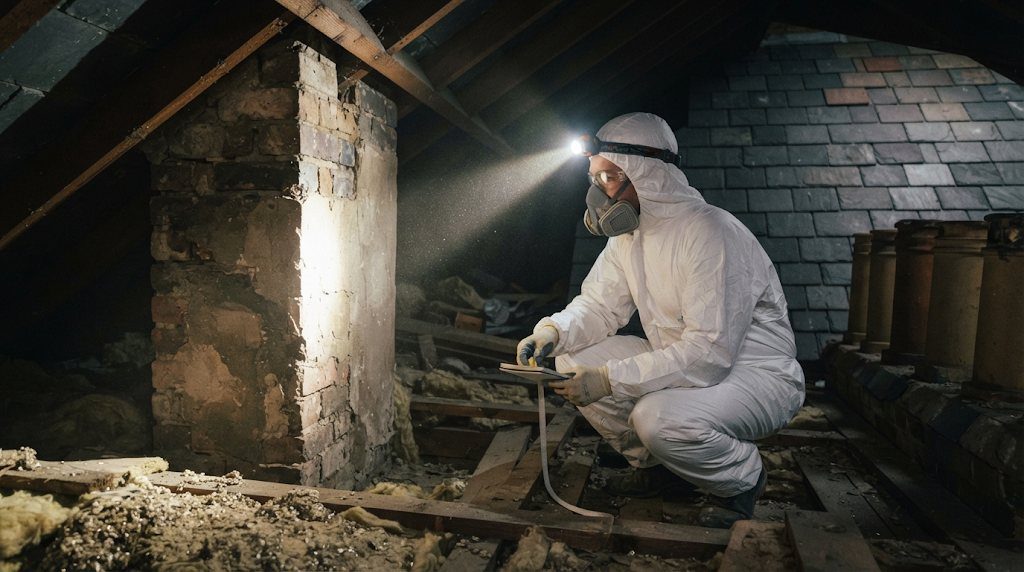
The survey is not a formality. Asbestos is routinely found behind plasterboard, under floor coverings, inside ducts and above suspended ceilings, which are exactly the places a strip-out reaches. Finding it after work has started means stopping the job, clearing the area and paying for emergency work. Finding it first means the removal can be planned and priced into the programme.
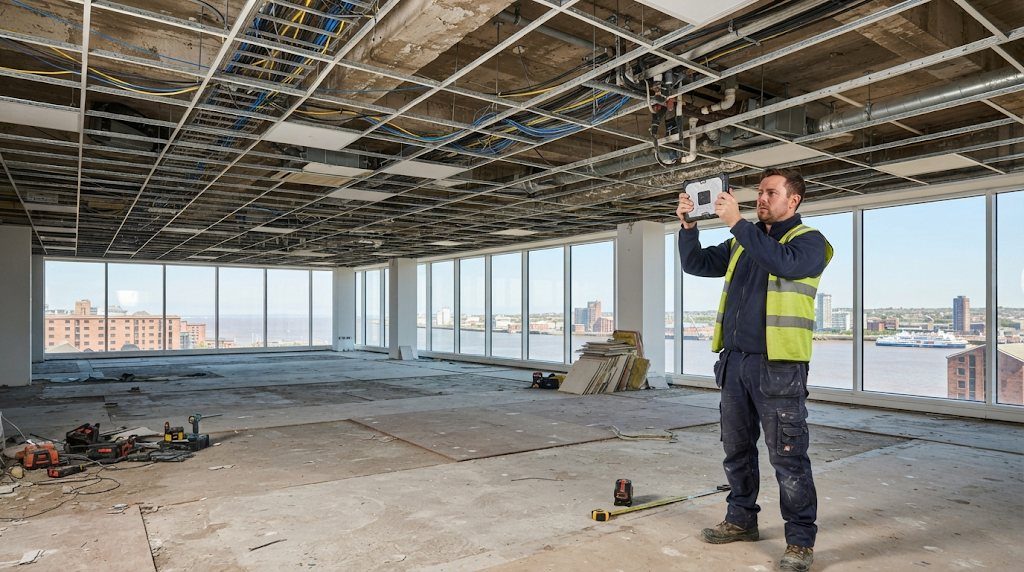
Conversion and strip-out work is steady across the city centre, the Baltic Triangle and the older commercial streets of the Wirral and Bootle. The survey should reach the contractor before the programme is fixed.
How an R&D survey differs from a management survey
A management survey looks at what can be disturbed in normal use. An R&D survey looks at everything that will be disturbed by the planned work. It is fully intrusive: the surveyor will open up fabric, lift floors, break into voids, and inspect hard-to-reach places in the affected area, which means the area needs to be vacated and is often left in a state that needs making good afterwards.
The survey is scoped to the works, so a kitchen extension needs a survey of the affected rooms and the roof or wall it connects to, while a full demolition needs the whole building. Giving the surveyor your drawings or a description of the planned work, and a start date, lets the scope be agreed before the visit.
What the report tells your contractors
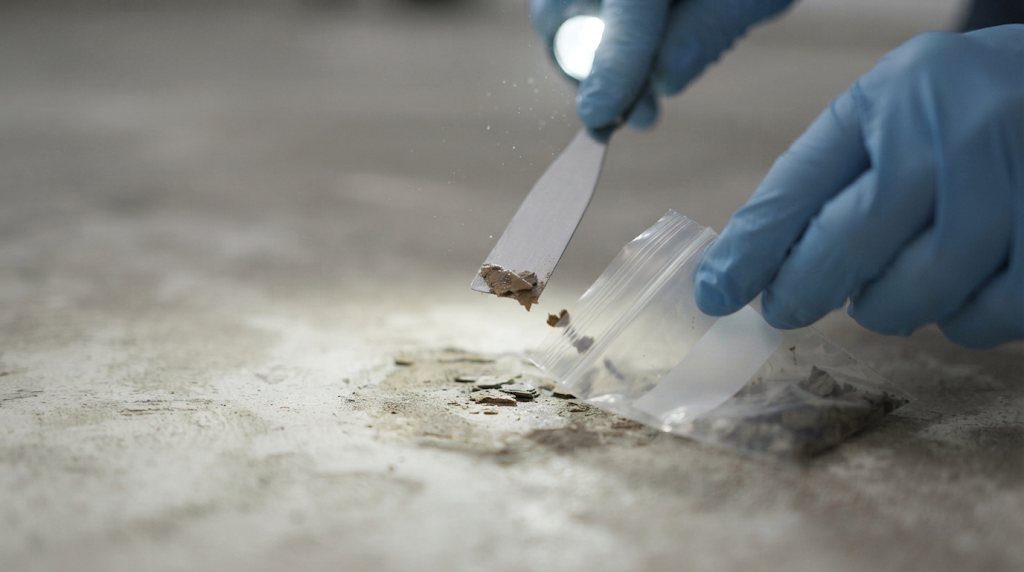
The report records every asbestos-containing material found in the scoped area with its location, quantity, photograph and sample result, so that it can be priced and planned around. Where asbestos is identified, the report indicates whether the work needs a licensed contractor or can be done by trained non-licensed workers. The type of material decides this: sprayed coatings, lagging and asbestos insulating board generally call for licensed removal, while some lower-risk materials such as textured coatings or cement products can sometimes be dealt with by non-licensed work, provided the correct controls are in place.
The survey is a record for the whole project. Contractors and building control will ask for it, and it should be kept with the building file afterwards.
What happens if asbestos is found
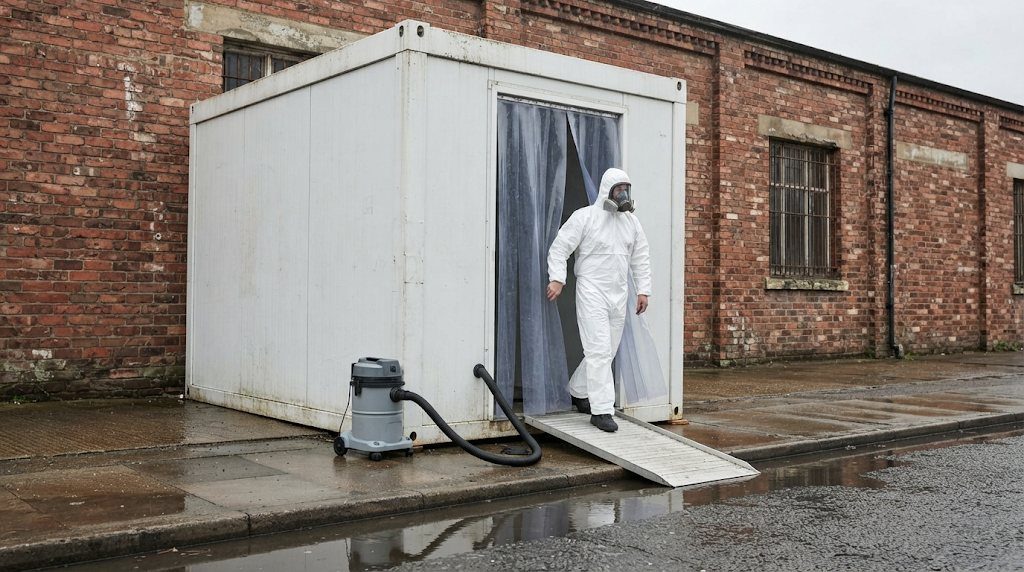
Finding asbestos does not mean the project is dead. It usually means one extra stage before the main work: the affected material is removed by licensed removal contractors under a controlled process, followed by a clearance check, and then the trades go in. We can connect you with licensed contractors for a quote once the survey results are in. You are free to get your own quotes as well.